
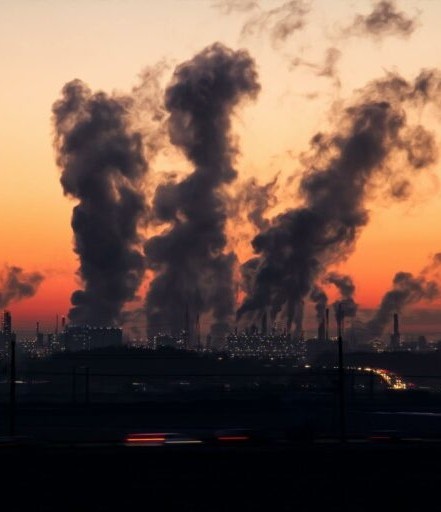
The Carbon adjustment mechanism at borders (MACF), also known as Carbon Border Adjustment Mechanism (CBAM), is a key EU measure to combat carbon leakage and to promote fair pricing of greenhouse gas emissions. This mechanism marks an important step in the implementation of the European Green Pactwith a view to achieving the carbon neutral in 2050.
An ambitious measure in the Green Pact
Long mentioned (from 1991 onwards), the idea of carbon adjustment at borders a strongly resurrected in 2019, as part of the Green Deal, which proposes a broad environmental roadmap. The European climate objective is clear: reduce by 55% gas emissions Greenhouse gas here 2030 in comparison with 1990. In July 2021, the European Commission presented its Fit for 55 package, in which the MACF occupies a central place.
What is MACF for?
In concrete terms, this adjustment mechanism to improve the effectiveness of the emissions trading scheme (ETS) avoiding the EU's climatic efforts being circumvented by importing products manufactured in countries with more flexible environmental standards. It is based on the principle of polluter paysby imposing a carbon price on imported products equivalent to that paid in the EU.
This measure targets emissions from certain sectors considered to be highly carbon intensive: steel, aluminium, electricity, hydrogen, fertilizer and cement. The aim is to prevent Carbon leakage — moving industries outside the EU — while maintaining fair competition between European and foreign producers.
How does this mechanism work?
Since 1 October 2023, the MACF has entered a transitional phase provided for by the Regulation (EU) 2023/956. Until the end of 2025, importers must only reporting carbon emissions associated with imported products. This environmental reporting is made to the national competent authorities, designated by each Member State (such as the Directorate-General for Energy and Climate (DGEC) in France).
From 2026 onwards, importers will have to purchase MACF certificates, the price of which will be aligned with that of the European carbon market. These certificates are intended to replicate the emission allowance system paid by European companies in order to ensure a form of carbon customs compliance.
Until 2034, some companies will continue to receive free allowances in the framework of the European ETS, in order to accompany the transition. However, quotas will be phase-out so that the rules apply equally to all economic actors. Future developments are also possible, via the general orientation of the ECOFIN Council and the Omnibus project, which aims to simplify certain regulatory or administrative arrangements.
A controversial mechanism
The carbon adjustment mechanism at borders raises international criticism. Several countries – notably BRICS (Brazil, Russia, India, China, South Africa) – denounce a neo-protectionist measure to defend the interests of European companies. Some developing countries, such as Mozambique or Zimbabwe, already dependent on exports of raw materials, fear that their growth will be hampered.
At the same time, some European industries are concerned about the risk of loss of competitiveness or slowing down the efforts of reindustrialization. In response to these concerns, the Commission expects the tool to be reviewed every six months, allowing for possible regulatory changes.
The end of thermal carsAnother structural measure of the Green Pact
Other key measures of the Green Pact include the planned ban on the sale of Thermal cars (gasoline, diesel) from 2035 on European territory. This measure will prohibit the placing on the market of new cars emitting CO2, for the benefit of vehicles Electrical or hydrogen, within the objective of zero net emission.
To deepen the various dimensions of European environmental policy, you can consult other articles published on our website, such as:
See also the 13 measures of the European Commission concerning the Green Pact and MACF on the All Europe reference site.
Frequently Asked Questions (FAQ) – To go further
What products are affected by the Carbon Border Adjustment Mechanism (CBM)?
The MACF currently applies to imports of products from carbon-intensive sectors: steel, aluminium, cement, nitrogen fertilizers, hydrogen and electricity. This list may evolve with the extension of the scheme to other industrial sectors concerned by the carbon pricing and the challenges European carbon market.
What is a carbon leak and why is MACF seeking to limit it?
Carbon leakage refers to the relocation of a country's production (or from a group of countries such as the European Union) to an area where climate regulations are less strict. This is usually done to avoid the constraints of the Emissions Trading Scheme (ETS) or to escape the carbon tax at borders. The MACF aims to limit this phenomenon by harmonising the carbon price applied to European imports and production, in order to preserve both the industrial competitiveness and the effectiveness of policies to combat greenhouse gases.
Could the Carbon Border Adjustment Mechanism (CBM) inspire other international regulations?
Yes. The European Union, through the implementation of the MACF and the European Green Pact, plays a leading role in combating global greenhouse gas emissions. Several countries – such as the United Kingdom, Canada or the United States – are now studying similar schemes for carbon pricing at borders to protect their markets and accelerate the ecological transition.

